


In Our Words
Blogs, testimony and op-eds from the Coming Clean network
July 2, 2026
EPA Doing Less With Less: slashing science staff; dismissing hazard data; weakening pesticide regulations; compromising health protections
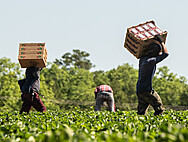
This summer, the U.S. Environmental Protection Agency (EPA) announced that it was expanding its list of “alternative test methods” that could be used to assess the health risks of chemicals, including pesticides, that end up in our air, water and food. Without frameworks in place to prevent backsliding, this will result in weaker health protections from harmful chemicals. Scientists within the Coming Clean network, allied with environmental health professionals and farmworker groups, have been sounding alarm bells about the irresponsible use of NAMs for many years. Now, scientists across our organizations must form a united front against expanded use of NAMs to replace proven science, before more regulatory protections disappear.
Read More

February 3, 2026
Guest blog: My Father Went to Europe to Fight the Nazis. Now They Are Here in America.
As I continue to watch in rage at the spectacle of masked, fascist paratroopers in the streets of Minneapolis, I am reminded of the famous quote by Mohandas Gandhi:"When I despair, I remember that all through history the way of truth and love have always won. There have been tyrants and murderers, and for a time, they can seem invincible, but in the end, they always fall. Think of it – always”. Guest blog from Gary Cohen, Board Member of Coming Clean and Co-founder of Health Care Without Harm.
Read MoreJanuary 22, 2026
Coming Clean condemns ICE violence, violation of civil rights, and racial profiling
Coming Clean is a national network committed to environmental health and safety for everyone, regardless of race, gender or immigration status. We condemn the ongoing and escalating violence of U.S. Immigration and Customs Enforcement (ICE) officers and agents against civilians. We stand with our members on the ground who exercise their legal rights to live, protest, and document ICE activity in their neighborhoods. ICE’s escalating violence and clear violation of civil rights threatens everyone’s health and safety.
Read More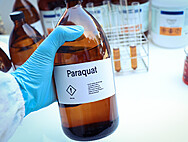
January 14, 2026
“New science” isn’t needed to ban paraquat in the U.S.
“EPA doesn’t need to wait for new science to ban paraquat in the United States. Credible research meeting EPA’s “gold standard” tenets has already been submitted to EPA’s public docket demonstrating that exposure to paraquat causes harm to farmworkers, farmers, and rural communities, and that its continued registration for use poses an unreasonable risk to these communities. Study after study has shown that people who use or are exposed to paraquat are more likely to develop Parkinson’s disease and other adverse health conditions. The evidence of harm is strong enough that over 70 countries have already banned this toxic pesticide from use. Meanwhile, EPA has declined to review this evidence. Now, by suggesting that we need to wait for “accurate new studies [to] reveal additional risk,” EPA is attempting to push the regulatory reset button to buy chemical corporations profiting from paraquat sales more time.
Read More
August 4, 2025
U.S environmental health is under attack
Living in a healthy environment means that you can trust that your basic living conditions – air, water, food, shelter, and the things in your built world – will not make you sick. Living in a healthy environment means that, no matter your identity, you trust the safety of public spaces, and do not fear bodily harm in your home, workplace, or street. The Trump Administration is systematically dismantling the conditions of a healthy and safe environment.
Read More
March 5, 2025
Sustainable Chemistry Cannot Deliver Environmental Justice Unless Fenceline Communities are Protected
So-called sustainable and/or green chemistry is being promoted in many circles as a means to both harness chemistry innovation to support more sustainable economies and reduce the environmental and public health impacts of chemical manufacturing. As we work to build research and policy which deliver health protections and justice to communities most impacted by the toxic harm of the chemical industry, we must critically examine sustainable chemistry initiatives and ask who will benefit from the technologies and practices. When something is promoted as “sustainable chemistry,” who is it sustainable for? Read more of this joint blog from Coming Clean and EJHA.
Read More
December 3, 2024
Beware the Toxic Chemicals at Dollar Stores
Jose Bravo, Coordinator of the Campaign for Healthier Solutions, calls on dollar stores to do more to get toxic chemicals out of the productst they sell. "The nation’s largest dollar stores continually fail to meaningfully strengthen their chemical policies and intervene in their supply chains to keep their shoppers safe."
Read More
October 16, 2024
These three states have already passed laws to reduce cumulative impacts
Over 125 organizations in the Coming Clean network agree that reducing cumulative impacts on environmental justice communities is one of our collective policy goals, as outlined in the Louisville Charter for Safer Chemicals. We know that environmental justice communities are not exposed to only one polluting facility or one health-harming pollutant at a time. When reviewing permits for polluting facilities, regulators should have to take into account the combined harm of existing industry on community health, and should have the authority to deny permit applications from facilities that add to disproportionate pollution burdens and existing health stressors. Passing cumulative impacts legislation at the state and local level is one promising way to make this possible. In 2021, Coming Clean released a policy brief by Drs. Nicky Sheats and Ana Baptista on state cumulative impacts legislation that passed in New Jersey, which we hoped would serve as a model for other states and cities. Since then, New York, Minnesota, Massachusetts and Connecticut have also passed cumulative impacts laws. Cities and counties are also pursuing creative ways to assess and reduce cumulative impacts, while involving impacted community members in decision making. Could your state or city be next? Read our Community Guide to Cumulative Impacts!
Read More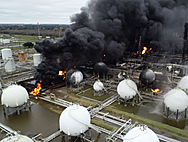
August 29, 2024
Hard-won Updates to the EPA’s Risk Management Program Rule
NEW FACTSHEET In spring 2024, after a multi-year collective advocacy effort, the Environmental Protection Agency (EPA) finalized the “Safer Communities by Chemical Accident Prevention” rule which updated the Risk Management Program (RMP) rule “to further protect vulnerable communities from chemical accidents, especially those living near facilities in industry sectors with high accident rates.” You can read our high-level summary takeaways here.
Read More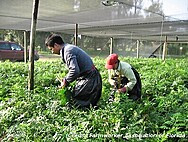
August 26, 2024
Coming Clean opposes misuse of New Approach Methods in determining chemical safety
NEW FACTSHEET Environmental health and farmworker advocacy organizations are urging the U.S. Environmental Protection Agency (EPA) to adhere to proven science when assessing the safety of chemicals regulated under its statutory authority, and warn against the misuse of New Approach Methods (NAMs) to designate pesticides and other harmful chemicals as safe. A new fact sheet explains that NAMs - which are mostly unproven and include biochemical, molecular, and cell-based assays and computational models widely promoted by the chemical industry as an alternative to rodent tests - “frequently understate or incorrectly evaluate hazard and risk with potentially harmful consequences for workers, families, wildlife and ecosystems.”"We are alarmed that EPA is relying on these new, unproven tests to justify reducing protection from pesticide exposure. Farmworkers and their children will bear the brunt of this reckless decision." stated Anne Katten of California Rural Legal Assistance Foundation, who coordinates Coming Clean’s collaborative team on Farmworker Health and Justice. Read the factsheet in English and Spanish.
Read More